
The NSE 50-share Nifty spurted 97.25 points, or 0.92 per cent, to 10,715.50

Indian rupee slipping below the record 88 level against the US dollar will enhance price competitiveness of Indian products in global markets and help exporters diversify beyond the US market, say exporters. However, import-dependent sectors such as gems and jewellery, petroleum and electronics may see lower benefits due to a rise in input costs, they stated.

'Without ground troops the US will not be able to oust the Iranian Islamic regime. Political change does not happen just by using bombs or planes.'

Oil prices fell from their two-year highs on Tuesday, as pressure mounted against an immediate attack on Iraq, lessening fears of a possible disruption of oil supplies from the world's eighth-largest exporter.

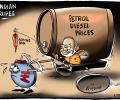
The price of petrol was hiked to Rs 101.39 a litre in Delhi from Rs 101.19 and to Rs 107.47 per litre in Mumbai, according to a price notification of state-owned fuel retailers. Diesel rates went to Rs 89.57 a litre in Delhi and Rs 97.21 in Mumbai.

The US said India will lower tariffs on a "vast array" of American industrial and agricultural goods, such as "fruits, vegetables", to zero per cent under the trade deal announced by President Donald Trump.
Investors should be selective in their stock pickings in the oil sector as concerns over subsidies and crude prices loom large.

Tata Steel was the biggest loser in the Sensex pack, sliding 8.59 per cent, followed by Tata Motors, Larsen & Toubro, Adani Ports, IndusInd Bank, Tech Mahindra, Reliance Industries, Sun Pharmaceutical, HCL Technologies, Tata Consultancy Services, Infosys, and NTPC, were the major laggards. On the other hand, Bajaj Finance, HDFC Bank, Nestle India, ICICI Bank, ITC, Asian Paints and Axis Bank were among the gainers.

India's exports contracted 11.8 per cent to $34.38 billion in October, showed government data released on Monday. Imports jumped 16.63 per cent to $76.06 billion.

Merchandise exports to the US jumped 23.5 per cent year-on-year (Y-o-Y) to $8.3 billion in June, even as India's overall outbound shipments witnessed contraction during the month, according to the data released by the commerce department on Tuesday. The increase in outbound shipments to the US was largely driven by the rush among exporters to utilise America's pause on its plans to impose country-specific reciprocal tariffs.
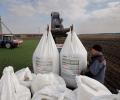
For the first time, the government is likely to dip into the Oil Industry Development Fund (OIDF) to finance part of its fertiliser subsidy programme for 2025-26, according to official sources. The finance ministry has accounted for Rs 23,000 crore in the FY26 Budget as net additional resources to be drawn from dedicated reserve funds, including the OIDF, the Agriculture Infrastructure and Development Fund, and the Universal Service Obligation Fund.

Stock markets will be driven by RBI's interest rate decision, tariff-related developments, global trends and trading activity of foreign investors in this holiday-shortened week, analysts said.

Stock markets closed higher for the second straight session on Tuesday, driven by gains in bank, IT and capital goods shares.

US commercial crude oil stocks were forecast to have risen by 3 million barrels last week

The decision to hike US H-1B visa application fee to $100,000, trade talks and the GST rate cut will be the key drivers for stock market movement this week, analysts said.

'The world is heading into a period of serious problems, and gold and silver are among the few ways to protect oneself.'
Indian Oil, Bharat Petroleum and Hindustan Petroleum raised avitation turbine fuel price by Rs 3,949 to Rs 36,252 per kilolitre in Delhi effective Monday midnight, an IOC official said. International crude oil prices have firmed to a seven-month high of $72 per barrel on hopes of demand revival in US.

I am inclined to believe that the Venezuela adventure is not an indication of American strength, alas, but rather of American weakness, points out Rajeev Srinivasan.

The major US indexes pared losses late in the session.

India's purchase of US crude oil has picked up in 2025 and could easily double their previous levels, government officials said on Wednesday. The surge comes in the wake of the then-incoming Donald Trump administration's announcement that it would consider hiking tariffs on a reciprocal basis, and pushed some countries, especially those with large trade surpluses with the US, to buy more of its energy.

Oil prices dipped on Wednesday as the market prepared for a gradual increase of Iranian exports into an already oversupplied market from 2016.
India's crude oil imports from Russia fell for a second straight month in January to its lowest in 12 months but the nation's insatiable appetite for Russian crude remains for the long term, according to data from energy cargo tracker and industry officials. Russia supplied 1.2 million barrels per day of crude oil to India in January, down from 1.32 million barrels in December and 1.62 million barrels in November 2023, according to data from energy cargo tracker Vortexa. Russia however continues to remain India's top oil supplier, accounting for a little less than a quarter of 4.91 million barrels a day of oil that the world's third largest energy consumer imported in January.

International oil prices continue to be extremely volatile, falling on one day and rising thereafter, a top oil ministry official said explaining the reason behind no reduction in petrol and diesel prices despite softening in input cost, but could not say if the rates will be cut before Maharashtra elections. Global oil benchmark Brent crude futures fell below $70 per barrel last week -- the first time since December 2021 -- but gained thereafter. Brent was trading at $74.58 per barrel on Thursday while West Texas Intermediate advanced to trade at $71.71.

Investors are showing some interest in the downstream energy cycle. Refiners and marketers, especially the public sector (PSU) oil marketing companies (OMCs) could see a revival of marketing margins. Lower crude oil and gas prices may also improve margins in industries like paints, logistics, synthetic fabrics, plastics, and fertilisers. In the medium-term, however, there could be a supply overhang affecting OMCs as new refining capacities are scheduled to be commissioned, especially in China, and this may lead to a drop in the refining margins as capacity would be surplus to demand until and unless there's a pick-up in global growth.

Oil marketing cos rightly passed on the burden to buyers.
One of the major advantages of buying Iran crude is the additional credit period of 90 days that the country gives to India, compared to 30 days by other countries.

From the 30-Sensex firms, Eternal declined by 4.02 per cent, followed by Bajaj Finance (3.88 per cent), Sun Pharma, InterGlobe Aviation, Trent, Asian Paints, Mahindra & Mahindra and Bajaj Finserv. HDFC Bank emerged as the only gainer from the pack.
Diesel price on Monday was hiked by 25 paise per litre -- the third increase since last week -- and more rate hikes for both diesel and petrol are in the offing in the coming days as international oil prices have soared to a three-year high. The price of diesel was hiked to Rs 89.32 per litre in Delhi and to Rs 96.94 in Mumbai, according to a price notification of state-owned fuel retailers. This is the second straight day of increase in diesel prices and the third since September 24 when the state-owned oil firms ended a three-week hiatus in rates.

Reliance Industries Ltd (RIL) on Friday reported a 9.6 per cent year-on-year rise in net profit for the September quarter, driven by strong performance in its consumer-facing retail and telecom businesses and a recovery in its core oil-to-chemicals segment.

The country's GDP grew at the fastest pace in seven quarters at 7.7 per cent in the January-March period, retaining the fastest growing major economy tag on robust performance by manufacturing and service sectors as well as good farm output.

US crude was down 25 cents at $52.08.

The rupee continued to face pressure in the first half of the current financial year (FY26), hitting fresh lows against the dollar, due to strengthening of the greenback, rising crude oil prices, and foreign outflows. Rupee has depreciated by 3.7 per cent so far in the current financial year after starting at a good note in April.

'The frenzy for gold is primarily due to the uncertainty surrounding the tariff war.'
Concerned over a spike in crude oil prices in international markets due to turmoil in West Asia, Finance Minister Pranab Mukherjee said on Wednesday the government is monitoring the situation and will manage it.

The sharp fall in oil price is positive for oil marketers as subsidy concerns reduce further.

'Geopolitical stability could remove the crude oil risk premium.'

A resurgence in Saudi Arabian supplies of crude oil to India coupled with an attack on an Iraqi tanker in August carrying crude to Europe may result in improved bargaining power for India with West Asian and Russian suppliers for winter supplies. Shipments of Saudi oil rebounded in September from August, surging to the highest since March while Russian oil shipments rose marginally as Saudi Arabia tried to claw back market share in Asia, according to industry sources and ship tracking data.
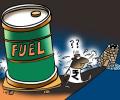
Wholesale price inflation (WPI) stayed in negative territory for the second consecutive month at (-) 0.58 per cent in July, as prices of food articles and fuel saw deflation, even though prices of manufactured items increased, government data showed on Thursday.

India's policy to subsidise retail prices of fuels such as diesel, which accounts for about 40 per cent of refined fuel consumption, is a major drain on the budget.
The sustained decline in the price of crude oil has reversed the trend in petroleum product pricing. Private retailers are looking to cut prices from next month, while public sector oil companies have shaved their losses on retail sale of petrol and diesel by more than half.
 © 2026 Rediff.com - Advertise with us - Disclaimer - Privacy Policy - Sitemap - Feedback - About us - Terms of use - Grievances